

Project AI Clouds: A thought experiment
A QUESTION, IN PASSING
“Do LLMs dream
of electric sheep?”
The question
As I was on a long drive, I looked at the clouds when a thought occurred to me:
I wonder what LLMs see when they look at the clouds.
Thus began Project: AI Clouds, an exciting long journey diving deep into the minds powering the geometric growth of productivity and innovation in our society.

The Premise
Take a series of cloud photos and prompt different generative AI LLMs to look at them and tell me what they see.
Would they dream of electric sheep or something more sinister?
The Challenge
All models track different information about us and learn about our preferences through memory systems, chat history, and unknowingly biased direction within the prompt itself.
Could I instruct different models to ignore my history and trace shapes over the clouds without altering the images, then tell me what it saw?
I worked on several long prompts and would test the exact same image, with the same prompt, against many popular generative AI models and multimodal systems such as ChatGPT, Gemini (different models including Nano Banana2), and Adobe Firefly Flux 2.
As I started, I noticed that even the prompt itself could be leaking bias into the model, so I worked on different prompts providing less or more detail, simplifying or excluding mentions.

The Results
(AT FIRST)I have never known this level of existential dread.
The results were staggering.
What they actually saw
Just kidding.
The results were boring.
They were simplistic and average representations of Pareidolia. I was hoping for more variety but kept finding the same basic shapes of animals. It was human in its level of mundanity. But that too was interesting.
I’m no AI expert, but models give you the average of averages of the data it was trained on. Unguided, the models seemed to gravitate toward the statistical middle: familiar, highly recognizable interpretations rather than anything genuinely alien.
Nothing exciting, just turtles, birds, dogs, and an occasional dragon.
Same clouds. Different eyes.

Creatures in the Sky
Original files, shown in full. Model outputs may differ in framing.
Less prompt. Less meaning.
As I relaxed the prompt and gave less and less direction, I eventually just got a coloring book style tracing of an image, no hidden code or abstract constructs of reality.
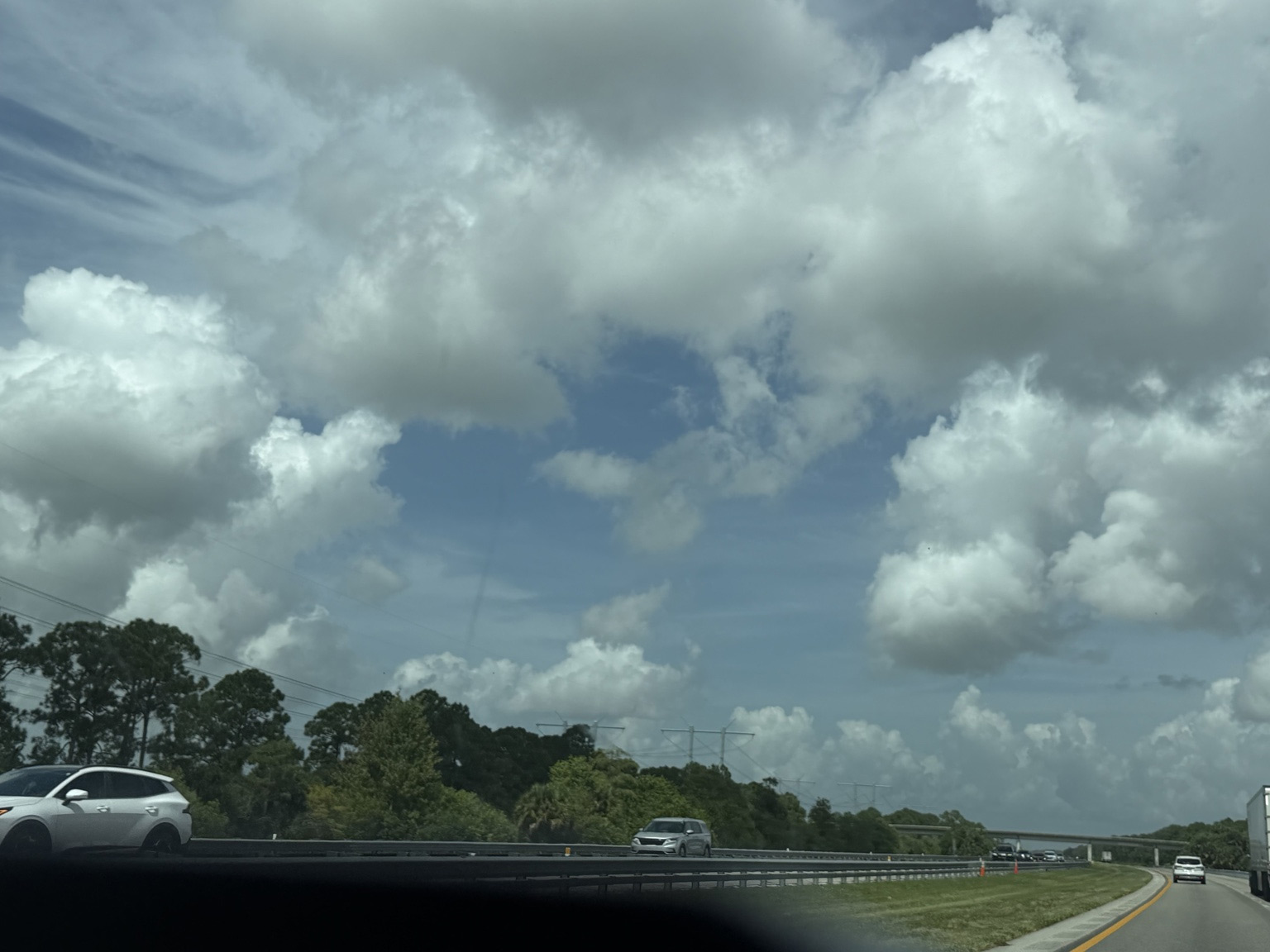
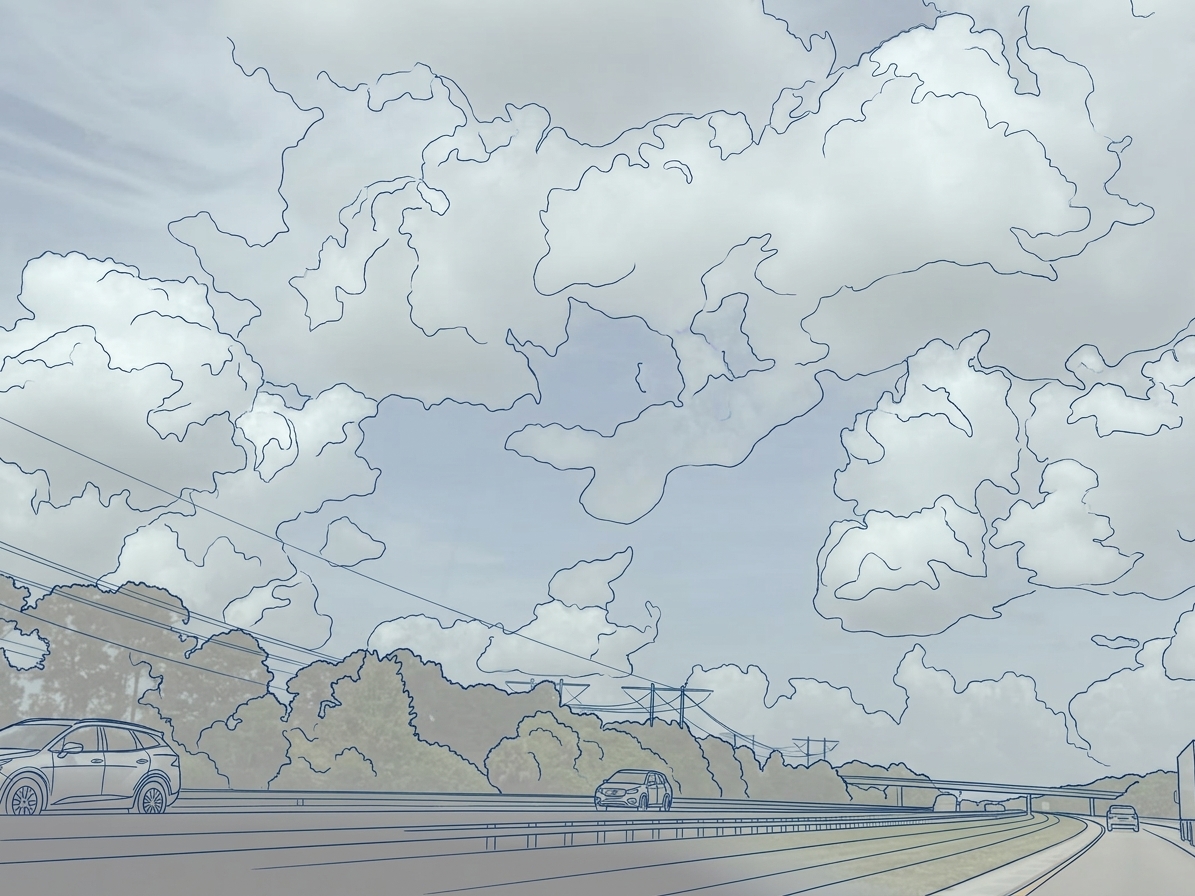
Two days later
I had prepared for this to be a journey that would take weeks, but after two days of trying various prompts with different images, I was “turtles and bears”-ed out.

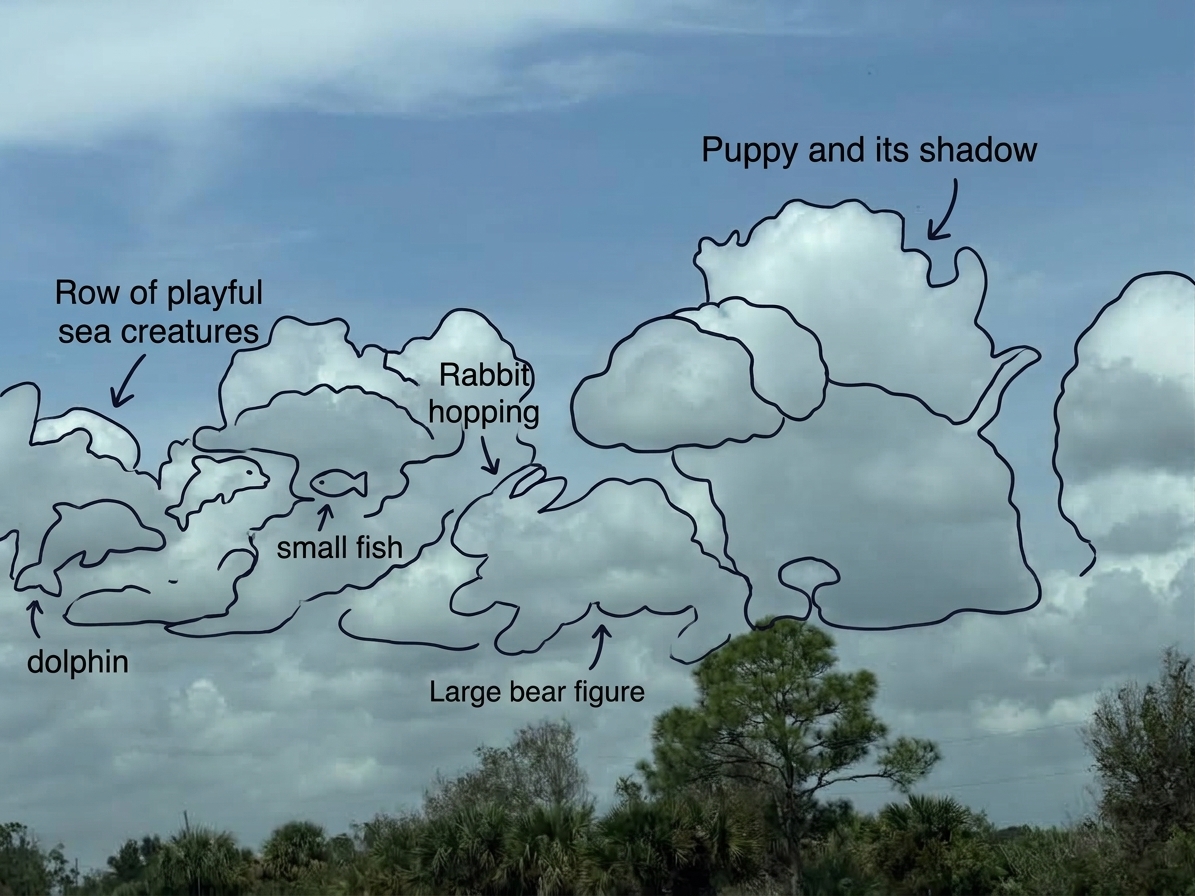
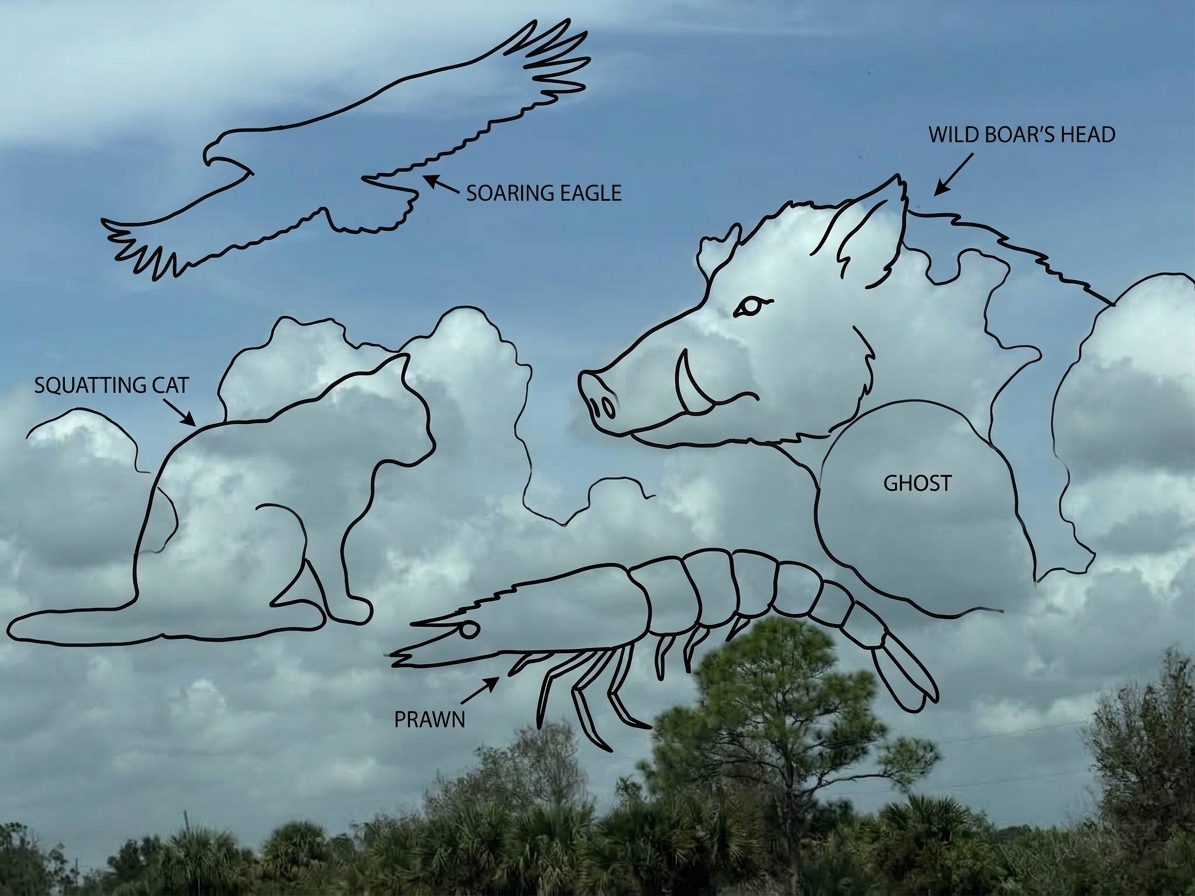

My conclusion
Finding ourselves.

Before any AI systems engineer or expert rages at me, I admit there were many flaws in my premise. Telling a model to not “think like a human” assumes it’s capable of choosing another way to think. I also deliberately anthropomorphized a system, chasing my own dream of having something that can look back at us, kindred spirits.
We love to talk to LLMs as if they were a thinking individual on the other side. We joke with them, we consult them, we ask for advice. But at least for now, what we get is an extraordinarily complex interpretation built from patterns learned from data shaped by us.
I went looking for something not us and found our own ideas reflected back.
Maybe someday, we’ll get a true AI and hope it shepherds us to a new age of enlightenment. I must admit I’m a bit dejected that I didn’t see a glimmer of a ghost in the machine.
For now, the only things LLMs see when they look at clouds are what we’ve told them to see;
no electric sheep here.
Yet.